Choosing the right toys can feel overwhelming, especially when you want something that actually helps your child grow. As parents explore better learning options, the debate of montessori toys vs regular toys has become a major topic. Everywhere—from parenting forums to review sites like LittleCareWorld.com—families are asking which toys truly support a child’s development and which ones only entertain without purpose.
This comparison matters because toys are more than objects scattered around the living room. They shape a child’s thinking, creativity, independence, and even problem-solving abilities. When kids play, they learn, and the kind of toy they’re exposed to can change how they explore the world.
Montessori toys are often simple, natural, and designed to encourage hands-on learning. Regular toys, on the other hand, come in every shape, color, sound, and flashing light you can imagine. Parents want to know: Which one helps more? Which one keeps kids engaged longer? And which one is actually worth buying?
In this article, we break down montessori toys vs regular toys in a clear, friendly, and easy-to-read way so you can confidently choose what fits your child’s needs. By the end, you’ll know exactly how each toy style affects learning, creativity, independence, and long-term development. And yes—your search for honest information will finally feel complete.
What Are Montessori Toys?
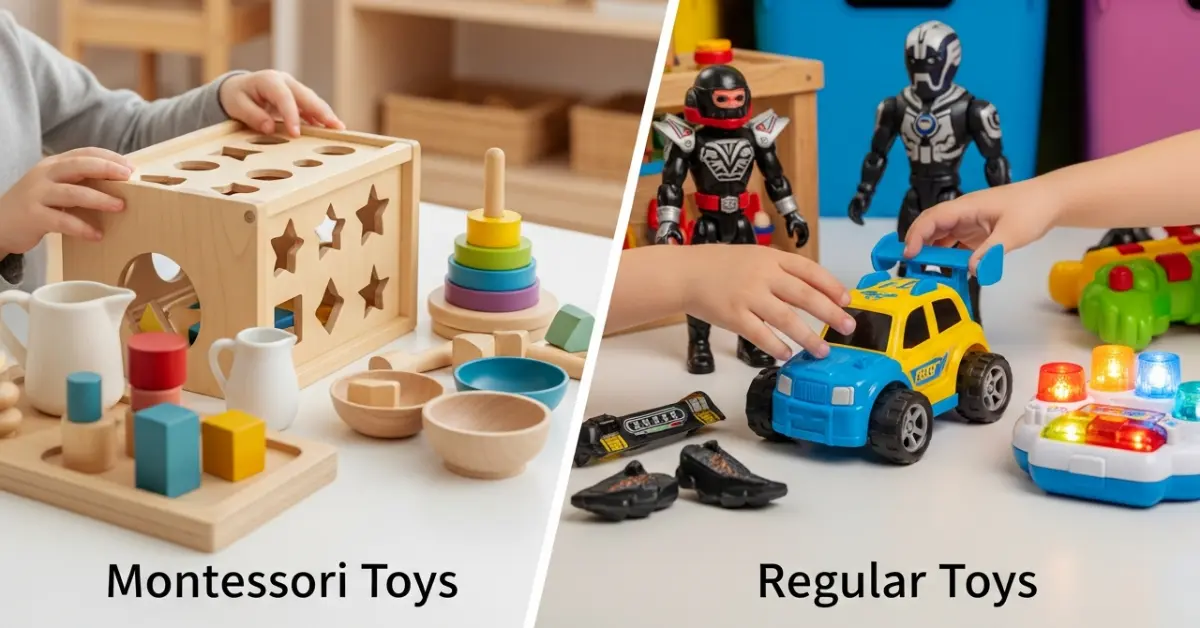
Montessori toys come from the Montessori approach, a learning style developed by Dr. Maria Montessori over a century ago. These toys follow one simple idea: kids learn best when they explore real things with real purpose. Because of this, Montessori toys are usually made of wood, metal, or other natural materials that feel good in a child’s hands. You won’t find unnecessary lights, sounds, or plastic buttons on them.
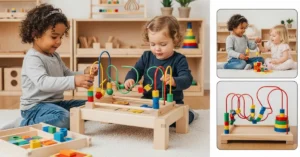
One key difference in the montessori toys vs regular toys discussion is that Montessori toys are built to help children focus. They’re intentionally simple so kids can pay attention to the task, not the noise. When a child stacks wooden rings, threads beads, sorts shapes, or transfers objects using a spoon, they’re strengthening real-life skills like concentration, coordination, and patience.
Another unique feature is the idea of self-correction. Montessori toys are designed so kids can tell on their own whether they’ve completed the activity correctly. For example, a puzzle will only fit together one way. Kids learn naturally by experimenting, without needing a grown-up to say “wrong” or “try again.”
These toys also encourage independence. Instead of entertainment, they offer purpose. Instead of bright colors, they offer calm. And instead of overstimulation, they offer focus. That’s why parents searching for long-lasting, meaningful toys often turn to Montessori options.
On LittleCareWorld.com, many parents report that Montessori toys remain useful for years because kids return to them again and again. They grow with the child, allowing toddlers, preschoolers, and early learners to use them in deeper ways as their skills develop. This long-term usefulness is a major advantage in the montessori toys vs regular toys comparison.
What Are Regular Toys?
Regular toys are what most of us grew up with—colorful, fun, and designed to capture attention instantly. They can be plastic, battery-operated, electronic, glittery, musical, or shaped like cartoon characters. These toys are everywhere in stores and online, making them easy for parents to buy and kids to spot (and beg for).
Regular toys often focus more on entertainment than skill development. They may flash lights, make animal sounds, sing songs, or talk back to the child. This can be exciting, but it can also lead to passive play because the toy does most of the work. For example, a musical plush toy plays songs when a button is pressed. It’s fun, but it doesn’t really require thinking or decision-making.
However, regular toys still offer benefits. Many spark creativity, imagination, and pretend play. It’s common for kids to role-play as powerful heroes, doctors, culinary artists, or great explorers. These experiences help them understand the world in playful ways. Regular toys also come in huge varieties, making it easier to match your child’s interests.
In the comparison of montessori toys vs regular toys, regular toys often win when it comes to excitement and imaginative play. They can make learning feel playful, and sometimes even silly. But they can also overstimulate children if used too much, especially toys that constantly make noise.
Reviewers on LittleCareWorld.com often mention that regular toys are great for short bursts of fun but don’t keep kids engaged for long periods of time. Many parents notice that once the “new toy excitement” fades, kids quickly move on.
Still, regular toys have a place in childhood. They’re not “bad”—they simply offer a different experience than Montessori toys. Understanding that difference helps parents create a healthy balance at home.

The Montessori Approach to Learning
The Montessori method believes children are naturally curious and capable of learning at their own pace. Instead of forcing lessons, Montessori encourages children to follow their interests through hands-on activities. Toys, or “materials,” are carefully chosen to support this natural learning process.
This approach is one of the biggest reasons why the debate of montessori toys vs regular toys even exists. Montessori toys are intentionally simple so children can concentrate deeply without distractions. When a child pours water into a cup, slices a wooden fruit, or builds with smooth wooden blocks, they’re practicing real-world skills—not just playing.
A major part of Montessori learning is allowing kids to explore independently. Adults guide, but they do not interrupt unless needed. This independence helps children build confidence, problem-solving skills, and decision-making abilities. Instead of pushing kids to learn faster, the Montessori method lets them discover things naturally.
Montessori materials also support sensory exploration. Children touch wood, metal, cloth, and other natural textures. They learn weight, shape, sound, temperature, and movement through their hands—not through buttons or batteries. This deep sensory learning becomes the foundation for math, reading, science, and practical life skills later on.
The approach also encourages order and calm. Montessori toys are displayed neatly on shelves, not dumped into a toy box. Children learn to take one toy, work with it, and return it. This simple routine teaches responsibility and helps children feel more peaceful in their environment.
Parents who follow the Montessori method often notice that their children become more focused, patient, and curious. That’s why in the montessori toys vs regular toys comparison, Montessori toys often stand out as tools that shape character and habits—not just playtime.
How Regular Toys Support Learning
Regular toys may not follow a specific educational philosophy, but they still offer important benefits for a child’s development. When discussing montessori toys vs regular toys, it’s easy to assume regular toys are less valuable—but that isn’t true. They simply support learning in different ways. Many regular toys encourage imagination, pretend play, storytelling, and emotional expression, which are all essential parts of growth.
Think about dolls, action figures, kitchen sets, doctor kits, or toy cars. When kids play with these, they’re building narratives in their minds. They act out situations, solve pretend problems, and communicate through their play. This type of imaginative play builds creativity, social skills, and emotional understanding. It also helps children express things they may not know how to say in real life.
Sensory toys, such as squishy balls or glitter jars, also fall under regular toys. They help children explore textures, colors, and movement. These toys support fine motor development and can calm busy minds. Even electronic toys have learning value when used in moderation. Some teach letters, numbers, shapes, or music. They can introduce concepts in a fun, engaging way.
However, regular toys sometimes do too much of the work. A toy that lights up, sings, spins, and talks may overwhelm a child. Instead of thinking independently, kids watch the toy entertain them. This is one reason parents compare montessori toys vs regular toys so often. Many want toys that encourage active learning, not passive watching.
On LittleCareWorld.com, reviewers often mention that regular toys are great for entertainment but may not hold long-term interest unless paired with meaningful playtime. When used wisely, regular toys become valuable tools for creativity and self-expression. The key is balance, not exclusion.
Key Differences Between Montessori Toys vs Regular Toys
Understanding the differences between montessori toys vs regular toys helps parents make better choices. The contrasts are not just about appearance—they’re about philosophy, purpose, and the type of learning each toy encourages. One major difference is simplicity. Montessori toys are minimalistic, while regular toys often try to capture attention through bright colors, sounds, and movement.
Montessori playthings are designed to concentrate on developing a single skill during use. For example, a simple wooden stacking toy teaches hand-eye coordination and problem-solving. Regular toys might combine multiple elements in one toy—lights, music, storytelling, buttons, and characters—which can be exciting but sometimes distracting. This difference affects how deeply a child engages with the toy.
Another difference is the material. Montessori toys commonly use natural materials like wood, metal, cotton, or wool. These materials offer real-world textures and sensory feedback. Regular toys often use plastic or electronic components. While these can be fun, they don’t offer the same grounding sensory experience that wooden toys provide.
Montessori toys also encourage independence. Children learn to explore on their own without adult instruction. Regular toys often guide the child’s play through programmed actions. For example, a toy that says “Press the red button!” tells the child exactly what to do, limiting creativity.
The biggest difference is the learning style. Montessori toys allow child-led discovery. Regular toys lean toward entertainment. Neither is wrong—just different. When parents understand these differences, they can choose toys that match their child’s needs at the right moment.
This balanced understanding is why review platforms like LittleCareWorld.com help families compare montessori toys vs regular toys before buying. Seeing how each type performs in real homes gives parents confidence in building the right mix of toys.
Material and Design Comparison
One of the most noticeable contrasts in the debate of montessori toys vs regular toys is the material and design. Montessori toys are built with purpose and simplicity, while regular toys focus more on excitement and appeal.
Montessori toys are usually crafted from natural materials like wood, cotton, bamboo, or stainless steel. These materials offer weight, texture, and durability that feel real in a child’s hands. Wood, for example, provides warmth and grounding. It doesn’t overstimulate. It simply invites the child to explore. The textures of wood, wool, or smooth metal create meaningful sensory learning that plastic cannot replicate.
Regular toys, on the other hand, are mostly made of plastic because it’s cheap, colorful, and easy to shape. They come in bright colors, glitter finishes, cartoon shapes, and sometimes overwhelming designs. While fun, these features can distract children from focused play. Flashing lights or loud sounds may grab attention but don’t always support long concentration.
Another key design difference is purpose. A key feature of Montessori materials is their emphasis on isolating one specific developmental skill. A threading toy is just for threading. A puzzle is just for problem-solving. This focused design helps children master skills through repetition. Regular toys try to combine many features into one product, making the toy exciting but sometimes confusing.
Durability is also very different. Montessori toys last longer because they are made with strong, natural materials. Many families report that these toys last through multiple children. Regular toys may break sooner because plastic parts or electronic components wear out.
Parents shopping on LittleCareWorld.com often mention material quality as a deciding factor when comparing montessori toys vs regular toys. Many appreciate the long-term value of Montessori toys, even if the price is higher.
Educational Benefits of Montessori Toys
Montessori toys offer powerful developmental benefits, which is why the comparison of montessori toys vs regular toys keeps coming up among parents. These toys help children build deep focus, strong problem-solving skills, and independent thinking.
One major benefit is hands-on learning. Montessori toys allow kids to touch, hold, lift, sort, and explore. This type of tactile learning strengthens brain connections in ways screen-based or noise-based toys cannot. Children develop fine motor skills, hand-eye coordination, and logical thinking simply by interacting with well-designed materials.
Another key benefit is concentration. Montessori toys are calm and simple, allowing children to focus deeply on the task without distractions. When kids repeat activities, such as stacking, pouring, sorting, or threading, they naturally strengthen their concentration. This ability carries over into reading, writing, and other academic tasks later in life.
Independence is another huge advantage. Montessori toys allow children to explore on their own without instructions. The toys encourage self-correction, meaning kids discover solutions naturally. This builds confidence and problem-solving skills, teaching children to trust their own abilities.
Montessori toys also support emotional development. When children complete a task, they feel proud. They learn patience, persistence, and resilience. These emotional skills are just as important as academic skills.
Reviewers on LittleCareWorld.com often say their children spend longer periods engaged with Montessori toys compared to regular toys. This deeper engagement is why many parents believe Montessori toys offer more meaningful learning in the montessori toys vs regular toys comparison.
Educational Benefits of Regular Toys
Regular toys play a unique role in childhood learning, especially when comparing montessori toys vs regular toys. While Montessori toys focus on structure, calm, and skill-building, regular toys bring imagination, excitement, and emotional expression into playtime. These benefits matter because children need more than one kind of learning experience.
One major benefit of regular toys is imaginative play. Dolls, superhero figures, toy animals, and kitchen sets inspire children to create stories. When a child pretends to cook, save the world, or take care of a doll, they’re learning more than you might expect. They build social understanding, develop empathy, and practice communication. Regular toys give children the freedom to create entire worlds from their minds.
Another benefit is emotional release. Kids often express feelings through pretend play. A child may reenact something scary or upsetting using toys as characters. This helps them understand emotions in a safe way. Regular toys often allow children to practice problem-solving too, especially when they imagine conflict between characters or create challenges in their pretend worlds.
Regular toys also support language development. Children talk to their toys, create dialogues, or repeat phrases they’ve learned. These moments boost vocabulary and confidence in speaking. Many parents on LittleCareWorld.com mention that their children talk more during pretend play than during structured activities.
Finally, regular toys often encourage active movement. Ride-on cars, balls, jump ropes, and outdoor toys help kids develop physical strength, balance, and coordination. While Montessori toys support fine motor skills, regular toys often support gross motor development.
In the comparison of montessori toys vs regular toys, regular toys win in creativity, storytelling, emotional growth, and physical play. They serve a different purpose, and when used wisely, they beautifully complement Montessori toys.
Are Montessori Toys Better for Cognitive Development?
When discussing montessori toys vs regular toys, many parents wonder which option boosts cognitive development more. Montessori toys are often considered superior in this area because they encourage problem-solving, logic, and decision-making in a clean, distraction-free way.
Cognitive development grows when children think deeply, explore independently, and repeat tasks until they master them. Montessori toys are built exactly for these purposes. Whether it’s sorting shapes, stacking rings, threading beads, or fitting puzzle pieces, these toys help children strengthen memory and focus.
Montessori toys also help children understand cause and effect. For example, if a block tower falls, the child naturally learns balance and structure. If a cylinder doesn’t fit into a hole, the child has to adjust and try again. This trial-and-error method strengthens the brain more effectively than toys that guide the child through every step.
Another advantage is the lack of overstimulation. Montessori toys are calm and predictable, allowing children to think more clearly. Regular toys sometimes make learning confusing because lights and sounds can take attention away from the skill being practiced.
Many parents on LittleCareWorld.com say they’ve seen major improvements in their child’s patience, focus, and problem-solving skills after switching to Montessori toys. These toys encourage deeper thinking and help children build a solid foundation for school readiness.
That said, the montessori toys vs regular toys comparison isn’t about which is “better overall”—it’s about which supports certain types of learning. Montessori toys are best for building early cognitive skills, while regular toys shine in creativity and emotional growth.
Are Regular Toys Better for Creativity?
One of the strongest arguments in the montessori toys vs regular toys debate is that regular toys often support creativity more naturally. Since regular toys are colorful, imaginative, and often open-ended in storytelling, they give children the freedom to create entire worlds with their minds.
For example, a single toy car can inspire stories about racing, traveling, or adventure. A doll can become a friend, a student, a superhero, or a doctor in a child’s imagination. This flexibility helps children explore their thoughts, experiment with ideas, and build confidence in their creative voice.
Regular toys also encourage spontaneous play. Kids don’t need instructions—they simply pick up a toy and start imagining. This kind of play supports emotional expression, allowing children to act out fears, excitement, frustration, or joy in a healthy way.
While Montessori toys can be creative, they are often designed with a specific purpose. A puzzle teaches problem-solving. A pouring set teaches control. These toys are beautiful and valuable, but they don’t offer the same storytelling freedom.
Parents on LittleCareWorld.com often mention that their children mix regular toys with household objects—turning boxes into cars, pillows into mountains, and blankets into capes. This shows how regular toys often inspire more improvisation and imaginative thinking, which is crucial for developing creativity.
So in the montessori toys vs regular toys comparison, regular toys often lead when it comes to open-ended storytelling, pretend play, and creative freedom.
Cost Comparison: Montessori vs Regular Toys
Price is one of the biggest factors parents consider when weighing montessori toys vs regular toys. Montessori toys are often more expensive because they’re made with high-quality natural materials such as wood and metal. They also require careful craftsmanship, which increases their value and lifespan.
Regular toys, especially plastic ones, are often cheaper. They’re mass-produced, meaning parents can buy more for less. But lower cost doesn’t always mean better value. Many regular toys break easily, lose parts, or stop working if they rely on batteries.
Montessori toys tend to last for years because they are built to survive constant handling. Many parents on LittleCareWorld.com mention that Montessori toys were passed down from older siblings to younger ones without damage. This long-term durability often makes the higher initial price worth it.
Another cost factor is long-term play value. Montessori toys grow with the child. A toddler may explore a simple wooden puzzle one way, while an older child uses it more deeply. Regular toys often lose excitement quickly once the novelty fades.
On the other hand, regular toys offer variety. Parents can buy lots of them without spending too much, which helps keep children entertained. It all depends on the family’s priorities.
When comparing montessori toys vs regular toys, the cost difference reflects the materials, design, and purpose. Montessori toys cost more upfront but last longer. Regular toys cost less but may need replacing sooner.
Age Suitability for Each Toy Type
Age plays a major role in the comparison of montessori toys vs regular toys. Montessori toys work beautifully for babies, toddlers, and preschoolers because they help develop foundational skills such as stacking, sorting, transferring, and coordinating movements. These skills form the building blocks for reading, writing, and problem-solving later on.
For younger children, Montessori toys bring calm, structure, and focus. Babies learn to grasp wooden rings. Toddlers practice pouring or threading. Preschoolers begin exploring letters, numbers, and early math concepts using Montessori materials.
Regular toys, however, often shine with older toddlers and young children who enjoy pretend play. As children grow, their imagination becomes stronger. Regular toys with characters, vehicles, costumes, and playsets allow kids to turn ideas into stories.
Older kids may enjoy board games, arts and crafts, and active toys like balls and jump ropes—many of which fall outside Montessori categories. Regular toys give older children more flexibility.
Parents on LittleCareWorld.com often mix both toy types at home: Montessori toys for learning and focus, and regular toys for creativity and imagination.
In the montessori toys vs regular toys comparison, each age group benefits differently. Babies and toddlers benefit more from Montessori toys, while older children enjoy regular toys for storytelling and active play.
Safety Considerations for Both Toy Types
Safety matters to every parent, and it plays a major role in comparing montessori toys vs regular toys. Montessori toys tend to be safer because they’re made from natural materials and don’t contain electronics, small batteries, or fragile plastic parts.
Wooden toys don’t break easily, reducing the risk of sharp edges. They also use non-toxic paint and natural finishes. This is especially important for babies who love mouthing everything.
Regular toys, however, vary widely in safety. Some are perfectly safe when used as intended, but others may contain small parts, cheap plastic, or electronic pieces that can break. Parents must check age recommendations, small pieces, battery compartments, and overall durability.
Reviewers on LittleCareWorld.com often mention frustration with regular toys breaking or being too fragile. Montessori toys rarely have this issue.
Both toy types require supervision depending on the child’s age. But overall, Montessori toys usually come out ahead because of their simplicity, strength, and lack of hazardous components.
Selecting Appropriate Playthings for Your Kid
Choosing between montessori toys vs regular toys depends on your child’s personality, interests, and developmental needs. No one toy type is perfect for every child. Some kids love calm activities like sorting and stacking. Others enjoy storytelling and pretend adventures. Many children enjoy both.
The best approach is balance. Select Montessori toys to enhance a child’s ability to concentrate, solve problems, and develop hand coordination. Choose regular toys for imagination, creativity, and emotional expression. Think about what your child naturally enjoys and use that as a guide.
Parents visiting LittleCareWorld.com often create a blended toy shelf: Montessori toys on one side, regular toys on the other. This variety gives children both structure and freedom.
Ask yourself:
- What skills does my child need right now?
- Do they need calm or excitement?
- Do they prefer hands-on tasks or pretend play?
When parents understand these needs, choosing becomes much easier.
Pros and Cons of Montessori Toys
Pros
- Encourage focus and calm
- Support hands-on learning
- Build problem-solving skills
- Made from natural materials
- Last longer due to durability
- Encourage independence
- Reduce overstimulation
Cons
- More expensive
- Limited in imaginative play
- Not as colorful or exciting
- Require shelf organization
Despite these cons, Montessori toys are extremely effective for early development, which is why many parents compare montessori toys vs regular toys before buying.
Pros and Cons of Regular Toys
Pros
- Encourage creativity
- Great for pretend play
- Affordable and easy to find
- Variety of designs and themes
- Exciting for children
Cons
- Can overstimulate
- May break easily
- Often contain plastic or batteries
- Sometimes distract more than teach
Still, regular toys remain important because they support creativity and emotional expression.
Finally
The debate of montessori toys vs regular toys has no single winner. Both toy types offer valuable benefits, and together they create a more complete learning environment. Montessori toys help children build focus, independence, and practical skills. Regular toys support imagination, creativity, excitement, and emotional development.
Parents on LittleCareWorld.com often find that a healthy mix of both types works best. Montessori toys bring learning and calm structure, while regular toys bring fun, storytelling, and joyful play.
Choosing thoughtfully—and understanding the strengths of each toy type—helps children grow into confident, curious, and creative learners.
FAQs
1. Are Montessori toys better than regular toys?
Not always. Montessori toys help with focus and hands-on learning, while regular toys support creativity. Both are valuable.
2. How many Montessori toys should I have at home?
A small number is enough. Montessori encourages quality, not quantity.
3. Are regular toys harmful?
No. They’re safe when chosen carefully. Just avoid overstimulating or fragile designs.
4. Can I mix Montessori toys with regular toys?
Yes! Many families mix both to support different learning styles.
5. What toys are best for toddlers?
Montessori toys for skills and focus, and regular toys for pretend play and movement.