
Becoming a new parent is exciting, emotional, and honestly a little overwhelming. One of the very first questions almost every parent asks is, “Am I feeding my baby the right way?” That’s where feeding tips for newborns become incredibly important. Feeding is not just about nutrition; it’s about comfort, bonding, growth, and building confidence as a parent.
Newborns don’t come with instruction manuals, and every baby behaves differently. Some want to feed every hour, others sleep longer stretches. Some latch easily, while others need time. This guide is created to walk you through practical, real-life feeding tips for newborns in a simple, supportive, and easy-to-understand way. Whether you’re breastfeeding, formula feeding, or doing a mix of both, you’ll find guidance here from the very first feed to those late-night sessions.
Understanding Newborn Feeding Basics
What Makes Newborn Feeding Unique
Newborn feeding is different from feeding an older baby or toddler. A newborn’s stomach is tiny—about the size of a cherry on day one and a walnut by the end of the first week. That’s why frequent feeding is normal and expected. One of the most important feeding tips for newborns is understanding that short, frequent feeds are healthy and necessary.
Newborns grow rapidly, and their bodies use energy fast. They also digest milk quickly, which explains why they seem hungry again soon after feeding. Feeding is also soothing. Babies don’t only eat because they’re hungry; they eat to feel safe, warm, and close to you.
Another thing that makes newborn feeding unique is that it’s a learning process for both baby and parent. Latching, swallowing, and coordinating breathing all take practice. Patience is key, and knowing these basics helps reduce stress and unrealistic expectations.
How Often Newborns Need to Eat
One of the most common concerns among new parents is feeding frequency. A key point in feeding tips for newborns is this: frequent feeding is normal. Most newborns eat every 2 to 3 hours, which means 8 to 12 feedings in 24 hours.
During the first few weeks, many babies don’t follow a predictable schedule. Some days they feed more often, especially during growth spurts. Night feedings are also necessary because newborns need consistent energy intake to support brain development and weight gain.
Instead of watching the clock, it’s better to watch your baby. Feeding on demand—when your baby shows hunger cues—is one of the most trusted feeding tips for newborns recommended by pediatricians worldwide.
How Much Milk Does a Newborn Need
Newborns don’t need large amounts of milk at once. In the first few days, they may only take a teaspoon or two per feeding. This gradually increases as their stomach grows. One of the most reassuring feeding tips for newborns is knowing that small amounts are normal and healthy.
Rather than focusing on exact ounces or minutes, pay attention to signs that your baby is getting enough milk:
- Regular wet diapers (at least 6–8 per day after the first week)
- Steady weight gain
- A relaxed, satisfied baby after feeds
If your baby seems content and is growing well, you’re likely doing things right—even if feeding looks different from someone else’s experience.
Breastfeeding Tips for Newborns
Benefits of Breastfeeding
Breastfeeding offers many benefits for both baby and mother. Breast milk provides ideal nutrition and contains antibodies that help protect newborns from infections. Among all feeding tips for newborns, breastfeeding is often recommended because it adapts to your baby’s changing needs.
For mothers, breastfeeding can help with postpartum recovery and create a strong emotional bond. It also allows for skin-to-skin contact, which helps regulate your baby’s temperature, breathing, and heart rate.
However, it’s important to remember that feeding success is not defined by breastfeeding alone. A well-fed baby and a supported parent matter most.
How to Start Breastfeeding Successfully
One of the most practical feeding tips for newborns is starting early. If possible, try breastfeeding within the first hour after birth. Newborns are often alert during this time and show natural feeding instincts.
Comfort matters. Choose a position that supports your back, arms, and baby’s head. Popular positions include the cradle hold, football hold, and side-lying position. The goal is a deep latch, where your baby takes in more than just the nipple.
Create a calm environment. Dim lights, reduce noise, and take deep breaths. Babies can sense tension, and a relaxed parent often leads to a smoother feeding experience.
How to Know If Breastfeeding Is Going Well
Many parents worry if their baby is getting enough milk. One of the most reassuring feeding tips for newborns is learning to recognize signs of effective feeding. Listen for swallowing sounds, observe rhythmic sucking, and notice if your baby releases the breast naturally when full.
Other signs include:
- Softening of the breast after feeding
- Adequate diaper output
- Steady weight gain over time
If your baby seems alert, feeds regularly, and has healthy diaper output, breastfeeding is likely going well.
Common Breastfeeding Challenges and Solutions
Breastfeeding can come with challenges, especially in the early weeks. Sore nipples, engorgement, or worries about milk supply are common. One important feeding tip for newborns is to seek help early instead of struggling alone.
Proper latch solves many issues. If pain continues, consulting a lactation specialist can make a big difference. Remember, challenges do not mean failure. They are part of the learning process.
Formula Feeding Tips for Newborns
When Formula Feeding Is a Good Choice
Formula feeding is a healthy and valid option. Some families choose formula due to medical reasons, personal preference, or lifestyle needs. One of the most important feeding tips for newborns is that a nourished baby is the goal—regardless of feeding method.
Formula provides complete nutrition and allows other caregivers to participate in feeding. This can be especially helpful for rest and shared responsibility.
Choosing the Right Formula
There are many formula options available, which can feel confusing. Most standard cow’s milk–based formulas are suitable for newborns unless advised otherwise by a pediatrician. One practical feeding tip for newborns is to avoid switching formulas frequently unless there’s a clear reason.
Always consult your baby’s doctor if you notice signs like excessive gas, rash, or feeding discomfort.
How to Prepare Formula Safely
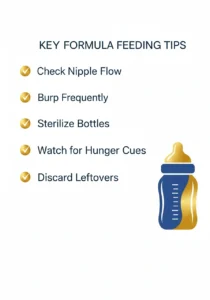
Safe preparation is critical. Wash hands before preparing bottles, use clean equipment, and follow mixing instructions carefully. Using too much or too little water can affect nutrition. One essential feeding tip for newborns is to prepare formula exactly as directed.
Prepared bottles should be used within the recommended time and stored safely to avoid contamination.
Feeding Formula the Right Way
Hold your baby upright during bottle feeding and support their head and neck. Practice paced feeding, allowing your baby to take breaks. This prevents overfeeding and helps mimic breastfeeding patterns.
One of the overlooked feeding tips for newborns is to never prop bottles. Feeding should always be supervised to ensure safety and bonding.
Combination Feeding: Breast Milk and Formula
Combination feeding means using both breast milk and formula to feed your baby. For many families, this approach offers flexibility and balance. One of the most practical feeding tips for newborns is understanding that feeding doesn’t have to be all-or-nothing. Life is unpredictable, and combination feeding can support both baby and parent.
Some parents choose combination feeding to return to work, manage low milk supply, or simply reduce pressure. Babies can thrive on combination feeding when it’s done thoughtfully. The key is consistency and paying attention to how your baby responds.
When introducing formula alongside breastfeeding, it’s helpful to do so gradually. This allows your baby’s digestion to adjust smoothly. One of the smartest feeding tips for newborns here is to protect milk supply by continuing regular breastfeeding or pumping sessions if breast milk remains part of the plan.
Newborn Hunger and Fullness Cues
Early Hunger Signs
Babies communicate hunger long before they cry. One of the most valuable feeding tips for newborns is learning to spot early hunger cues. These include:
- Rooting (turning head toward touch)
- Lip smacking
- Bringing hands to mouth
- Light fussing
Responding early makes feeding calmer and easier. A crying baby is already stressed, which can make feeding more difficult.
Late Hunger Signs
Crying is a late hunger signal. When babies reach this stage, they may struggle to latch or feed smoothly. One essential feeding tip for newborns is to soothe your baby first—rocking, talking softly, or skin-to-skin contact—before attempting to feed again.
Signs Your Newborn Is Full
Knowing when your baby is full is just as important as knowing when they’re hungry. Fullness cues include relaxed hands, slowing sucking, turning away, or falling asleep peacefully. Respecting these signals is one of the healthiest feeding tips for newborns, as it helps prevent overfeeding and supports natural appetite regulation.

Feeding on Demand vs Feeding on Schedule
Many parents wonder whether they should follow a strict schedule. One of the most trusted feeding tips for newborns is to feed on demand. This means responding to hunger cues rather than watching the clock.
Newborns grow rapidly and unpredictably. Feeding on demand supports healthy weight gain, stable blood sugar, and emotional security. Over time, natural patterns begin to form without forcing a schedule.
Some families find loose routines helpful, but flexibility is key. Your baby’s needs will change often, especially during growth spurts.
Night Feeding Tips for Newborns
Night feedings are exhausting, but they are essential. Newborns need nighttime nutrition to support brain development and steady growth. One of the most realistic feeding tips for newborns is accepting that night feedings are temporary—even though they feel endless at first.
To make night feedings easier:
- Keep lights dim
- Speak softly
- Avoid stimulating play
- Prepare feeding supplies in advance
These small adjustments help your baby return to sleep more easily after feeding.
Burping and Digestion Tips
Burping helps release air swallowed during feeding. One of the simplest feeding tips for newborns is to burp your baby during and after feeds. This can reduce gas, fussiness, and spit-up.
Common burping positions include:
- Over the shoulder
- Sitting upright on your lap
- Lying face-down across your knees
Some babies burp easily, others take time. If no burp comes, that’s okay—every baby is different.
Common Feeding Problems in Newborns
Spit-Up and Reflux
Spitting up is normal for many babies. One calming feeding tip for newborns is knowing that small spit-ups usually aren’t a problem if your baby is gaining weight and seems comfortable.
Keeping your baby upright after feeds and avoiding overfeeding can help reduce spit-up.
Gas and Colic
Gas can make babies uncomfortable and fussy. Gentle tummy massages, bicycle leg movements, and burping can help. One reassuring feeding tip for newborns is remembering that colic often improves with time.
Feeding Refusal
Occasional feeding refusal can happen due to tiredness, overstimulation, or growth changes. Stay calm and try again later. Persistent refusal should be discussed with a pediatrician.
Growth Spurts and Feeding Changes
Growth spurts often happen around 2–3 weeks, 6 weeks, and 3 months. During these times, babies may want to feed more often. One of the most important feeding tips for newborns is to expect these changes rather than fight them.
Increased feeding doesn’t mean your milk or formula isn’t enough—it means your baby is growing. Feeding frequently during growth spurts helps boost milk supply and supports development.
Safety Tips for Feeding Newborns
Safety should always come first. Some essential feeding tips for newborns include:
- Always support your baby’s head and neck
- Never leave a baby unattended while feeding
- Avoid feeding while lying down unsafely
- Never give water, solid foods, or honey
Clean feeding equipment thoroughly and wash hands before every feeding session.
When to Call a Pediatrician
While most feeding concerns are normal, some signs require medical advice. Contact your pediatrician if your baby:
- Has very few wet diapers
- Shows poor weight gain
- Vomits forcefully
- Seems constantly lethargic
One of the smartest feeding tips for newborns is trusting your instincts. If something feels off, it’s always okay to ask.
The Emotional Side of Feeding Your Newborn
Feeding isn’t just physical—it’s emotional. Many parents feel pressure, guilt, or self-doubt. One deeply human feeding tip for newborns is reminding yourself that you are learning, just like your baby.
There is no single “perfect” way to feed a newborn. What matters is love, consistency, and care. Comparing yourself to others only adds stress. Confidence grows with experience.
Finally
Feeding your newborn is a journey filled with learning, adjustment, and connection. With the right feeding tips for newborns, patience, and support, feeding becomes less stressful and more meaningful over time. Every baby is different, and every parent’s path is unique. Trust yourself, stay flexible, and remember—you’re doing better than you think.
Frequently Asked Questions
- How often should I follow feeding tips for newborns during the first month?
Daily. Newborn feeding guidance applies around the clock, especially during growth periods. - Are feeding tips for newborns different for breastfed and formula-fed babies?
Some details differ, but hunger cues, safety, and bonding remain the same. - Can feeding tips for newborns help reduce crying?
Yes. Responding early to hunger cues often prevents excessive crying. - Should feeding tips for newborns change at night?
The approach stays the same, but a calm environment helps nighttime feeding. - When do feeding tips for newborns start changing?
Usually after 3–4 months as babies grow and feeding patterns stabilize.